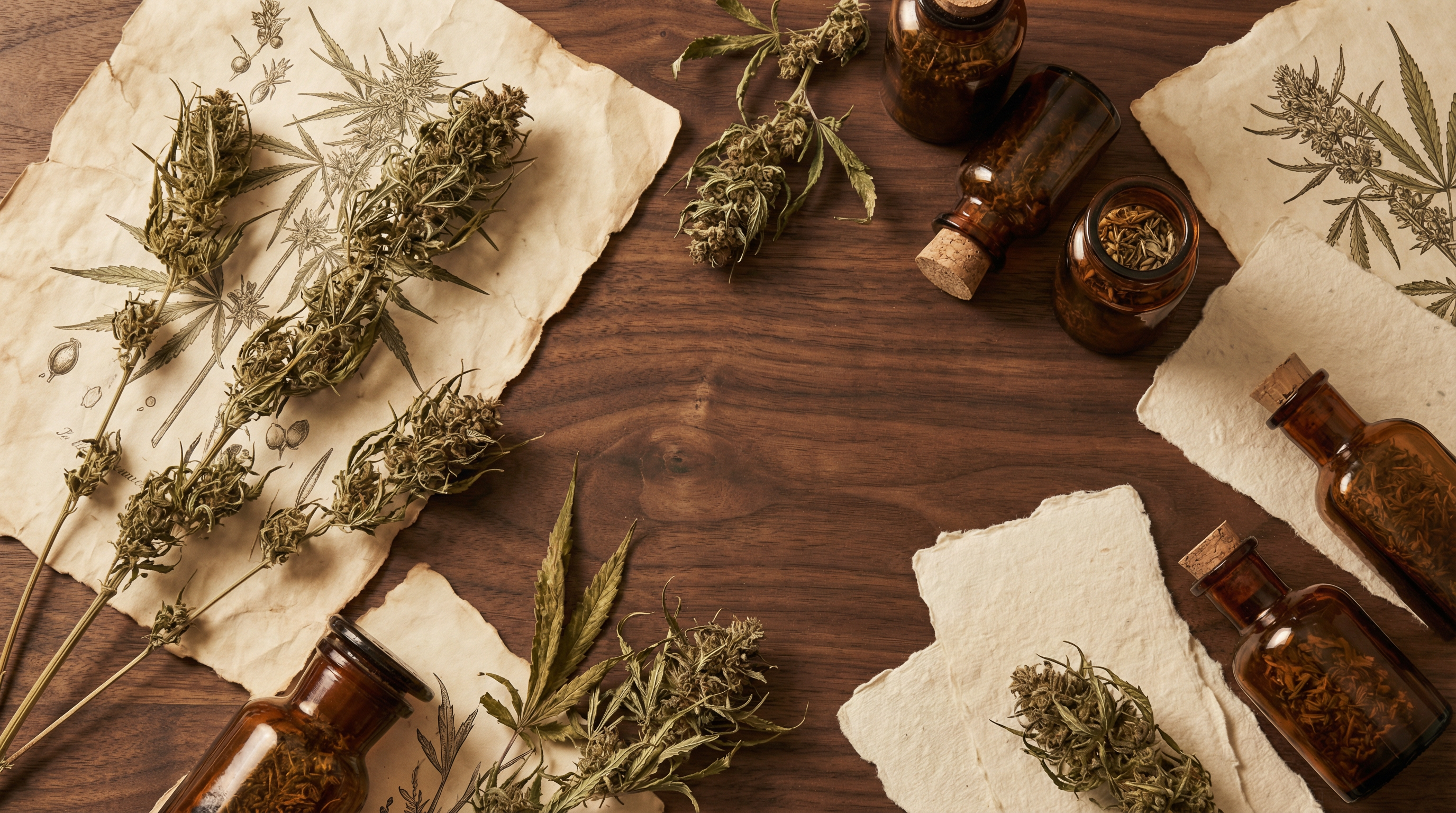
The Oldest Cultivated Crop
Hemp (Cannabis sativa L.) is one of the oldest cultivated plants in human history. Archaeological evidence of hemp cultivation dates to at least 8,000 BCE in Taiwan, where hemp fiber was used to make rope and textiles. Some researchers place the beginning of hemp cultivation even earlier — up to 10,000 years ago — based on pollen records and the presence of hemp seeds at Neolithic sites across Central Asia.
For most of human history, hemp was not a controversial plant. It was a crop — one of the most useful crops ever domesticated — valued for its fiber, its seeds, its oil, and its medicinal properties. The controversy is recent, and understanding the history helps explain both how we got here and why the current moment in hemp regulation represents a return to historical norms rather than a departure from them.
Ancient China: The First Hemp Civilization
The earliest documented use of hemp as medicine comes from China. The Shennong Bencao Jing (Divine Farmer's Classic of Materia Medica), compiled around 100 CE but based on oral traditions dating to approximately 2700 BCE, describes hemp as one of the "superior" herbs — those that "nourish life" and can be taken continuously without harm.
The text describes hemp's use for pain, inflammation, and as a sleep aid. It also notes the psychoactive properties of hemp seeds and flowers, describing them as producing "visions" when consumed in excess — suggesting an awareness of the plant's psychoactive potential alongside its medicinal applications.
Hemp fiber was central to Chinese civilization. The earliest known woven textiles are hemp, dating to approximately 4000 BCE. Hemp paper — invented in China around 100 CE — enabled the spread of written knowledge across Asia. Hemp rope and sail cloth were essential to Chinese maritime trade.
The Ancient World: Egypt, India, and the Mediterranean
Hemp spread westward from Central Asia through trade routes and migration. Evidence of hemp use has been found in Egyptian tombs dating to 1000 BCE. The Ebers Papyrus (c. 1550 BCE), one of the oldest surviving medical texts, describes a hemp-based preparation for inflammation.
In ancient India, hemp (bhang) was one of the five sacred plants mentioned in the Atharva Veda (c. 1500-1000 BCE). It was used in Ayurvedic medicine for pain, anxiety, and fever, and played a role in Hindu religious ceremonies. The tradition of consuming bhang — a preparation of hemp leaves and flowers in milk — continues in India today.
Greek historian Herodotus (c. 440 BCE) described Scythian funeral rituals involving hemp vapor — an early account of hemp's psychoactive use in a ceremonial context. Hemp fiber was used throughout the ancient Mediterranean world for rope, sail cloth, and textiles.
Medieval Europe and the Age of Sail
Hemp was a strategic crop throughout medieval Europe. Charlemagne encouraged hemp cultivation across his empire in the 8th century CE. By the medieval period, hemp fiber was essential for the ropes, sails, and rigging of European sailing vessels — and by extension, for the Age of Exploration.
The British Royal Navy's dependence on hemp for its fleet was so significant that Henry VIII mandated hemp cultivation on English farms in 1533. Elizabeth I continued this policy, requiring farmers with more than 60 acres to dedicate a portion to hemp production.
Hemp paper was the dominant writing material in Europe until wood pulp paper became economically viable in the 19th century. The Gutenberg Bible was printed on hemp paper. The first drafts of the United States Declaration of Independence were written on hemp paper.
America: From Colonial Staple to Prohibited Crop
Hemp was one of the first crops cultivated in the American colonies. Virginia mandated hemp cultivation in 1619. George Washington grew hemp at Mount Vernon. Thomas Jefferson grew hemp at Monticello and wrote about hemp cultivation in his farm journals.
Hemp remained a legal and economically important crop in the United States through the 19th century. The shift began in the early 20th century, driven by a confluence of economic interests, racial politics, and regulatory overreach that is well-documented in historical scholarship.
The Marihuana Tax Act of 1937 effectively prohibited hemp cultivation by imposing prohibitive taxes on all cannabis, including industrial hemp. The act was passed despite testimony from the American Medical Association opposing it, and its primary architect — Harry Anslinger of the Federal Bureau of Narcotics — relied heavily on racially charged propaganda to build public support.
Hemp cultivation was briefly revived during World War II under the "Hemp for Victory" program, which encouraged American farmers to grow hemp for military rope and canvas. After the war, prohibition resumed.
The Controlled Substances Act of 1970 classified all cannabis, including hemp, as a Schedule I controlled substance — placing it in the same category as heroin and above cocaine in terms of regulatory restriction.
The Road Back: From 2014 to Today
The modern hemp revival began with the 2014 Farm Bill, which created a framework for state-authorized hemp research programs. The 2018 Farm Bill went further, removing hemp (defined as cannabis with ≤0.3% THC on a dry weight basis) from the Controlled Substances Act entirely and establishing a federal regulatory framework for hemp cultivation and commerce.
The 2018 Farm Bill did not fully resolve the regulatory status of hemp-derived CBD — the FDA has maintained that CBD cannot be marketed as a dietary supplement under existing law, creating a regulatory gray area that the industry has operated in since. The 2026 regulatory deadline represents the most significant opportunity for resolution of this ambiguity since 2018.
Why This History Matters
The 10,000-year history of hemp is not merely interesting background. It is evidence of a fundamental truth: hemp is a useful plant with a well-documented safety profile across millennia of human use. The 70-year period of prohibition (1937-2018) was an anomaly — a politically motivated departure from historical norms that is now being corrected.
The current moment in hemp regulation is not the beginning of something new. It is the resumption of something very old.
These statements have not been evaluated by the Food and Drug Administration. This product is not intended to diagnose, treat, cure, or prevent any disease.
Read more in The Apothecary Journal →